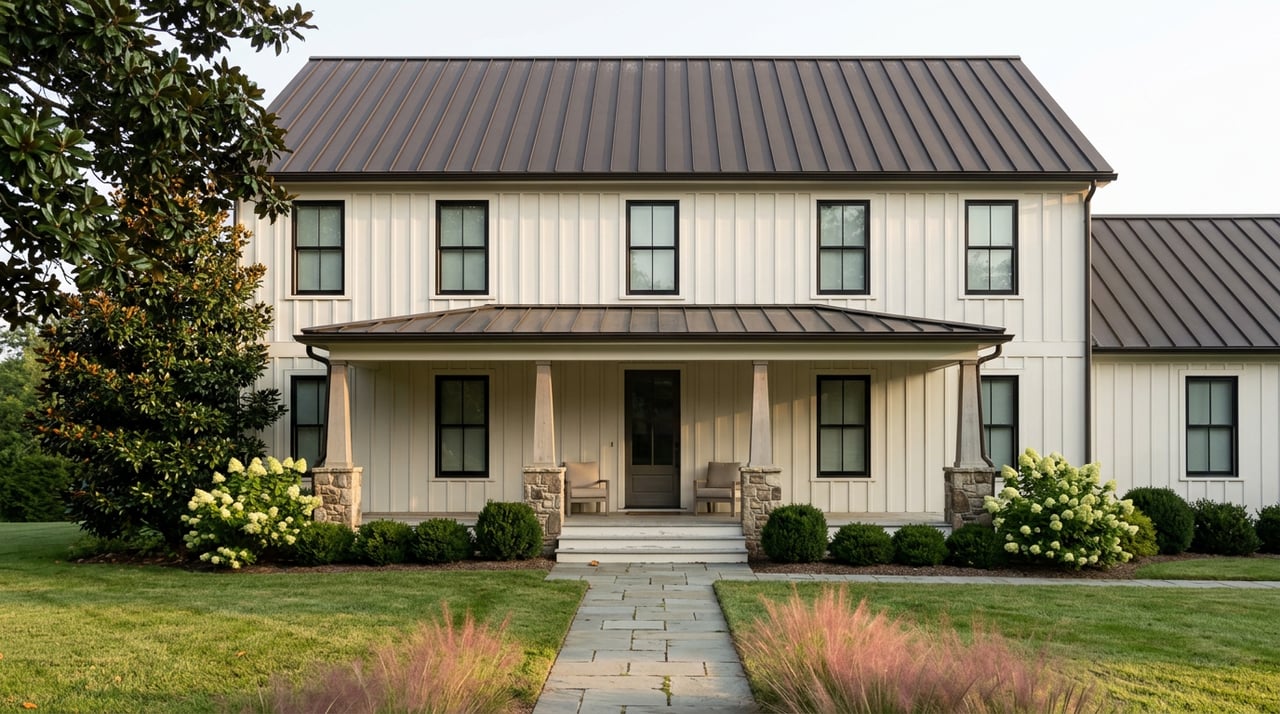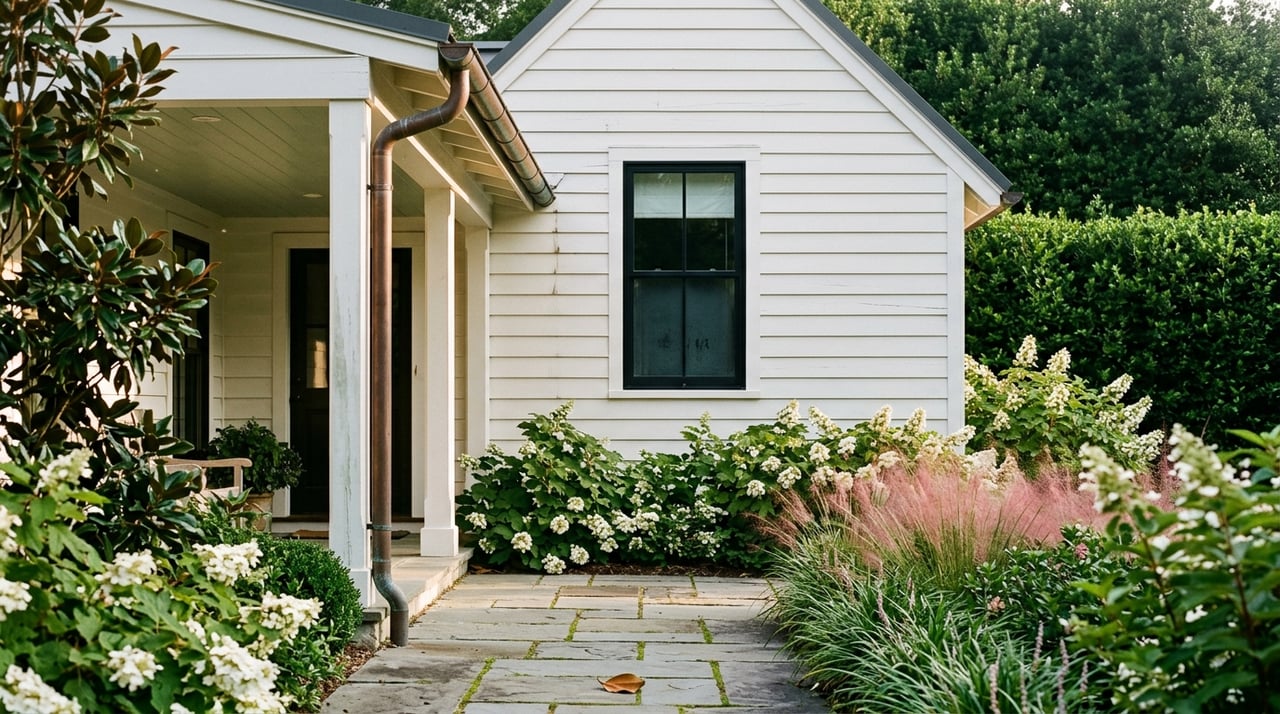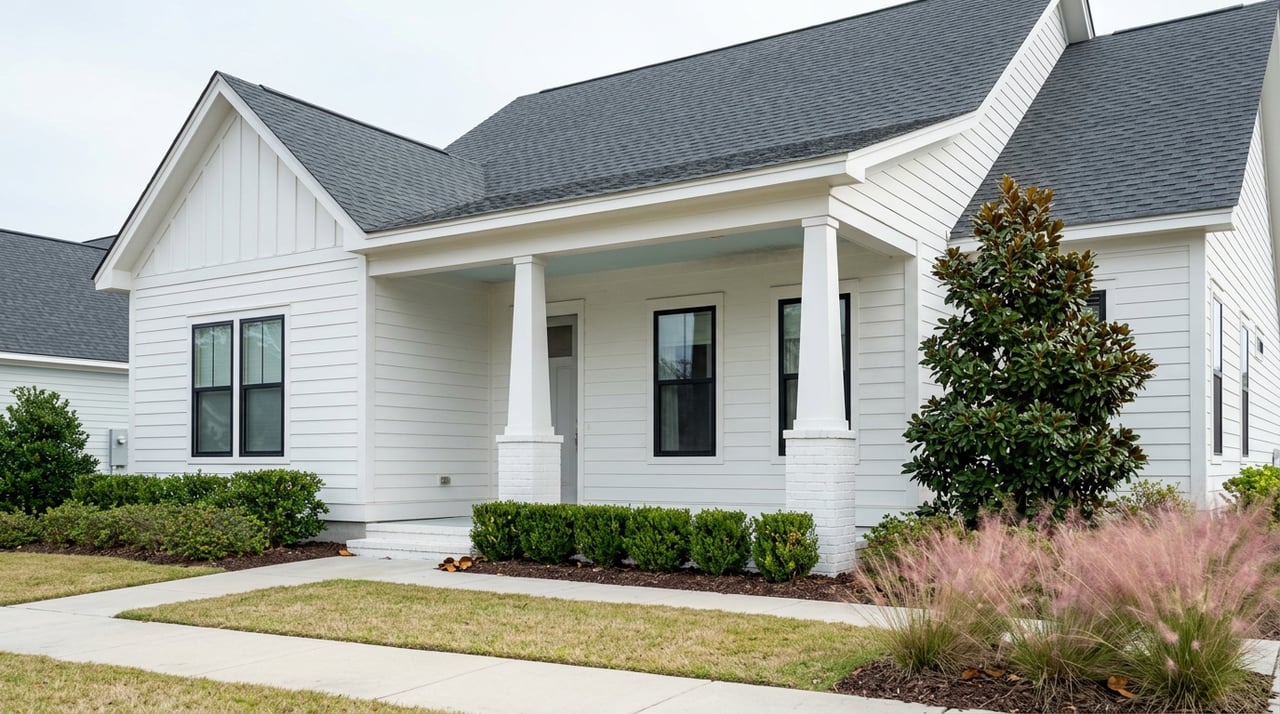
Type "Suffolk VA home prices" into a search bar this summer and you will get whiplash. In February 2026, one major listing site's tracker put Suffolk's median sale price at $407,000, up 6.1% year over year. Three months later, that same source's rolling three-month window through May 2026 showed the median down to $403,000, a 5.1% decline year over year, on the same city. A separate home-value index pegged the average Suffolk home at $366,698 as of late June 2026. Another site logged a median sold price of $489,900 for homes closing that same June. That's more than $120,000 of daylight between trackers looking at the same city in the same season.
The instinct is to figure out which number is right and ignore the rest. That's the wrong move. None of these figures is wrong. Each one is averaging together closings from a city that was never built to have one price.
Suffolk is Hampton Roads' largest city by land area, and it didn't grow the way a single subdivision grows. It grew the way a scattering of small towns grows, one village at a time, and those villages still behave like separate places even though they share a mailing address. The swings in the median aren't noise to explain away. They're the clearest evidence available that "Suffolk" actually describes several distinct housing markets stitched together under one city seal. Two things that happened in 2026, a council vote and a bank's construction plan, show exactly where the pressure inside that patchwork is building and where it isn't.
Suffolk Was Built as Villages, Not a Subdivision
Locals don't say "I live in Suffolk." They say Harbour View, Hillpoint, Chuckatuck, Driver, Holland, or Whaleyville, because those are the original village names Suffolk absorbed as it expanded, and each one still carries its own pace, lot size, and utility setup. Two homes with an identical Suffolk address can put you a five-minute walk from a golf clubhouse or a twenty-minute drive down a two-lane road past a soybean field, and both feed into the same citywide median as if they were interchangeable.
They aren't. And in 2026, two local decisions drew a sharper line than usual between where Suffolk's growth is landing and where it isn't.
The Vote That Shows Where the Pressure Actually Is
In March 2025, Suffolk's Planning Commission reviewed a request to rezone nearly 19 acres at 7250 Harbortown Parkway, in the Harbour View area directly across from the Bon Secours medical campus, from mixed-use to residential. The application, backed in part by Bon Secours Hampton Roads Health System, sought to clear the way for 344 residential units. The commission's vote failed to reach a majority, effectively recommending denial, and city planning staff shared the same concern.
A month later, on April 22, 2025, Suffolk City Council overrode that recommendation anyway, voting 5-2 to approve the rezoning. Vice Mayor Lue Ward and Council Member Ebony Wright voted no. The project, now called Ascend at Harbortown, is a 344-unit development being built by D.R. Horton, one of the same national builders that helped fuel Suffolk's original construction boom two decades ago.
When a professional planning staff and an elected commission both say no to a project and a city council says yes anyway, that's not routine business. That's a political system responding to demand it can't ignore. The city's own figures back the pressure up: Suffolk's population grew from about 100,659 residents in 2023 to roughly 104,598 by 2025, growth a Suffolk resident quoted by WTKR described simply as more kids and more traffic in the area. That growth isn't spreading evenly across Suffolk's roughly 430 square miles. It's concentrating in Harbour View, and the council's 5-2 vote is the paper trail proving it.
The Employer Signal Landing at the Same Address
Ascend at Harbortown isn't arriving into an empty corridor. TowneBank's Harbour View Campus opened with a single building in 2003 and now employs more than 600 people supporting the bank's frontline operations. In May 2026, the City of Suffolk announced TowneBank's plan to add an 85,000-square-foot building to that campus, complete with an updated gym, a larger café, and a corporate boardroom. Site work is set to begin in summer 2026, with building construction following about six months later and occupancy expected in late 2028.
A company doesn't build a bigger cafeteria for employees who won't move in for two years unless it's planning around that neighborhood staying its base well past this decade. Read alongside the 344 new units a few minutes away, TowneBank's expansion is the kind of multiyear demand signal that outlasts a single season of new listings, and it's specific to Harbour View, not to Suffolk as a whole.
What Four Versions of Suffolk Actually Cost
Instead of asking what a Suffolk home costs, ask what a specific village costs, because the answer changes by tens of thousands of dollars depending on where you're standing.
| Village | What's Driving It | Typical New-Home Price Band | The Trade-off |
|---|---|---|---|
| Harbour View / North Suffolk | TowneBank's expansion, the Ascend at Harbortown pipeline, shortest commute to Norfolk and Chesapeake | Mid $300s to $500s, with land scarcity pushing builders toward townhomes | You pay for convenience, and you're buying into the corridor absorbing the most new supply |
| Hillpoint | Positioned as the new-construction option without Harbour View's premium, home to communities like Hillpoint Estates and Willow Bend at Hillpoint | $400s | Newer builds and easy access to Route 58, but earlier phases like Hillpoint Meadows have already sold out, so timing matters |
| Chuckatuck | One of Suffolk's original farming villages, home to communities like Village Pointe | Upper $300s | Larger lots and a quieter pace, but confirm water and sewer setup before writing an offer |
| Downtown / Central Suffolk | Historic housing stock alongside new active-adult product like The Retreat at Harbour Cove and Hallstead Reserve | Low $400s to low $500s for new product, historic resale priced on its own terms | Walkable streets and cultural venues, moving on a different clock than the new-construction corridors |
The Inspection Line That Doesn't Show Up in the Listing Photos
Harbour View and Hillpoint were built as planned subdivisions tied into city water and sewer from day one. Head further west into Chuckatuck, Driver, or Holland and that's no longer a given. Some properties out there still run on private well and septic, a detail easy to miss while scrolling photos of a renovated kitchen. Before you write an offer on anything in Suffolk's western or southern villages, ask directly whether the home is on public utilities or a private well and septic system. If it's the latter, build time into your due diligence period for a septic inspection and a well flow test. That single disclosure line can move your closing timeline by weeks if it surfaces late.
So Which Suffolk Are You Actually Buying Into?
The next time a Suffolk median flashes across a listing site, resist the urge to anchor to it. Ask which village generated that number instead. Comparing Harbour View to Hillpoint means comparing paying a premium to live inside the corridor absorbing 344 new units and a bank's expansion against paying less for new construction ten minutes further out. Comparing either one to Chuckatuck means you're not even negotiating in the same market. In Harbour View you're negotiating against active builder inventory that turns over every quarter. In Chuckatuck you're negotiating against family land that rarely turns over at all.
Before you tour a single house, ask for a village-level read on days on market and pricing, not a citywide one. The citywide number will keep bouncing around because it's averaging markets that don't behave alike, and that bounce is information, not confusion, once you know how to read it.
Three Questions Before You Book a Tour
Is Suffolk a buyer's market or a seller's market right now? It depends on the village. Citywide days-on-market figures for 2026 have ranged from 45 days in one three-month window to 73 days in a single earlier month, both accurate, both proof that pace shifts with whichever submarket dominated closings that stretch. Ask your agent for the specific village's current pace, not the citywide average.
Does new construction always cost more than resale in Suffolk? Not automatically. Hillpoint's new construction is built to undercut Harbour View's premium, while some Downtown resale homes carry character pricing that a new subdivision can't replicate. Which village matters more than whether the house is new or resale.
Do I need a well and septic inspection everywhere in Suffolk? No. It's mainly a concern in the rural villages, Chuckatuck, Driver, Holland, and Whaleyville, where some properties still run on private systems. Harbour View and Hillpoint developments are typically tied into city water and sewer from the start.
Suffolk isn't hard to buy in. It's hard to compare from a distance, because the one number every listing site hands you was never built to describe a single market. If you're trying to figure out which version of Suffolk actually fits your commute, your budget, and your timeline, that's the exact conversation our team at Cape & Coast Real Estate Group has with buyers every week. Let's Connect and talk through which corridor makes sense for you before you spend a weekend touring the wrong one.